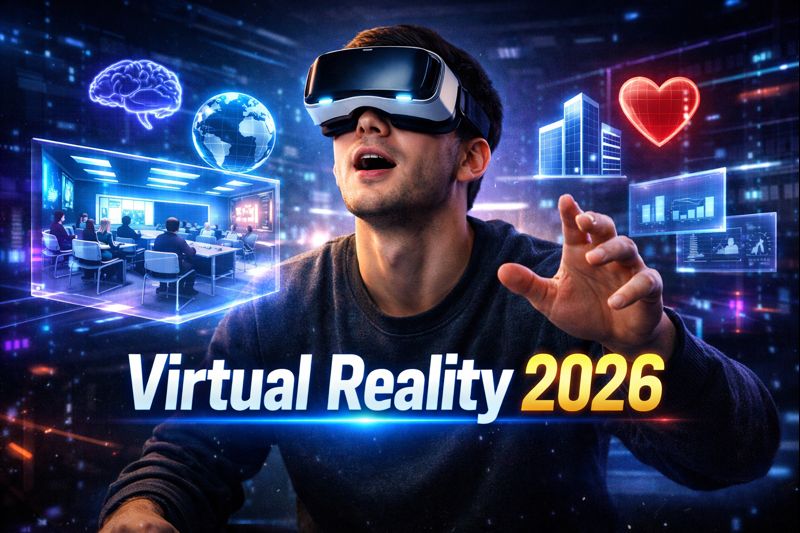
Virtual Reality in 2026: How VR Will Change the Way We Learn, Work, and Live
Virtual Reality is no longer just a future idea. By 2026, VR is expected to become a part of everyday life — from classrooms and offices to hospitals and entertainment.
1. VR in 2026 Will Feel More Realistic
Advanced motion tracking, high-resolution displays, and lightweight headsets will make virtual environments feel more natural than ever before.
- Natural hand and body movement
- Improved depth and realism
- AI-powered interactive environments
2. Education Will Move Inside Virtual Classrooms
In 2026, VR will redefine education by creating immersive virtual classrooms where students learn by experiencing, not memorizing.
From virtual science labs to historical site visits, learning will become more engaging and effective.
3. VR Will Transform Remote Work
Virtual offices will replace traditional video calls. Teams will collaborate as avatars inside shared 3D workspaces, making remote work more interactive and human.
4. Healthcare Will Use VR for Treatment
VR will be used for surgical training, therapy, rehabilitation, and mental health treatment. Doctors will practice procedures in safe virtual environments before operating on real patients.
5. Entertainment Will Become Fully Immersive
In 2026, entertainment will go beyond screens. Users will attend virtual concerts, experience movies from inside the scene, and play games using their entire body.
6. New Career Opportunities in VR
As VR adoption grows, new job roles will emerge:
- VR Developers
- Virtual Environment Designers
- VR Educators and Trainers
- Metaverse Architects
Final Thoughts
Virtual Reality in 2026 is not about escaping reality — it is about enhancing it. Those who adapt early will lead the next digital revolution.